Published
- 5 min read
The 10-Minute DIY Squirrel Baffle: Protect Your Feeders on a Budget
The 10-Minute DIY Squirrel Baffle: Protect Your Feeders on a Budget
As we established in our comprehensive pest control guide, a squirrel baffle is an absolute necessity if you want to keep your expensive Nyjer seed out of the paws of neighborhood rodents. A high-quality commercial “Torpedo” baffle from Amazon is incredibly effective and looks great, but they typically cost between $25 and $40.
If you have multiple feeding poles in your yard, outfitting every single one with a commercial baffle can quickly become an expensive proposition.
Fortunately, the physics of defeating a squirrel are quite simple: you just need a wide, smooth, wobbly barrier that they cannot climb over or grip onto. In this guide, I will show you my two favorite expert DIY methods for building highly effective squirrel baffles using cheap items you can find at any hardware store or even in your recycling bin.
1. The “Stovepipe” Torpedo Baffle (The Professional DIY)
This method mimics the highly successful commercial torpedo baffles. It is durable, looks relatively clean, and is 100% effective against climbing squirrels.
The Supplies You Need:
- 1 piece of galvanized steel stovepipe or HVAC ducting (8 inches in diameter, 24 inches long).
- 1 metal end-cap (to fit the 8-inch pipe).
- A drill with a metal-cutting bit.
- 1 hose clamp (sized to fit your shepherd’s hook pole).
- Total Cost: ~$15
The 3-Step Build:
- Drill the Cap: Take the 8-inch metal end-cap and drill a hole directly in the dead center. The hole should be just barely wider than the diameter of your shepherd’s hook pole.
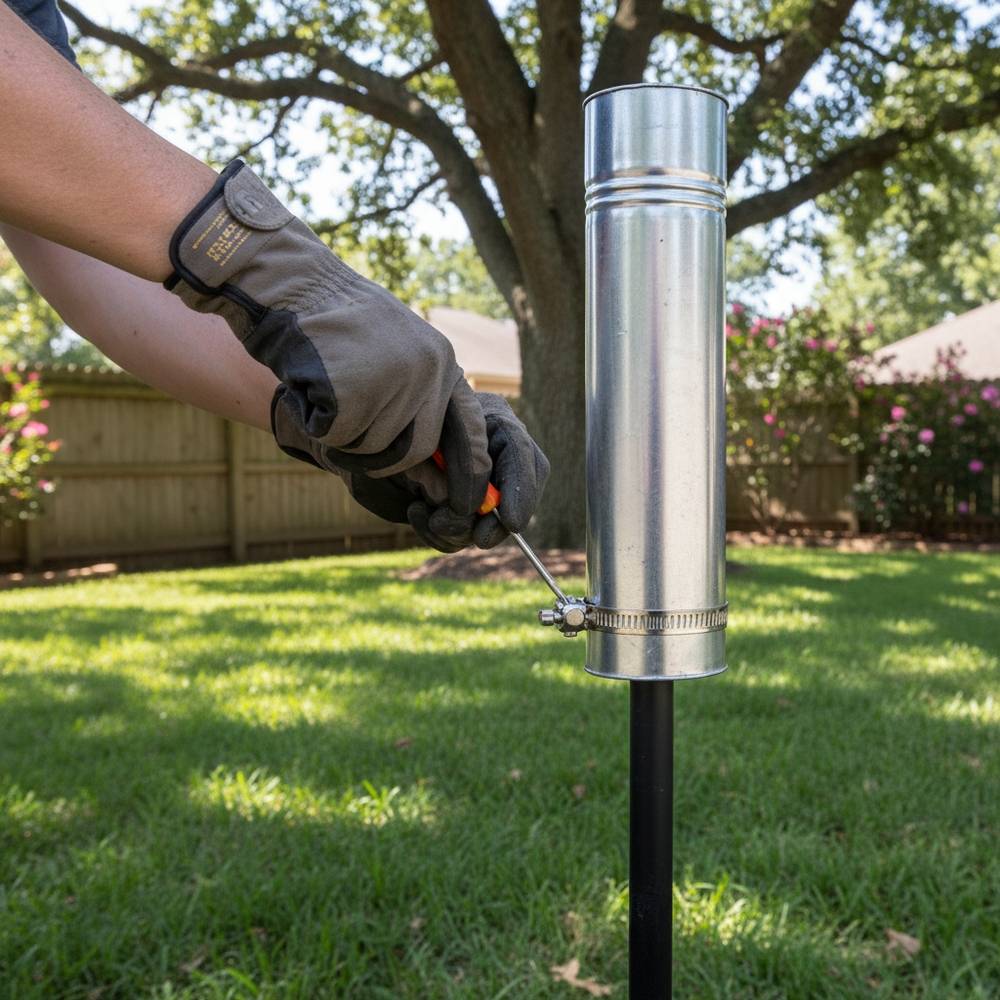
- Set the Anchor: Slide the hose clamp down your shepherd’s hook pole until it is exactly 4.5 feet off the ground. Tighten it down securely with a screwdriver. This clamp will act as the “stopper” that holds the baffle up.
- Assemble and Hang: Slide the drilled end-cap down the pole so it rests loosely on top of the hose clamp. Then, slide the 24-inch stovepipe up from the bottom and snap it securely into the end-cap.
Why it works: When a squirrel climbs the pole and hits the 24-inch metal pipe, they cannot grip the smooth galvanized steel. If they try to leap up and grab the top edge of the pipe, the entire assembly will tilt and wobble (because the hole in the cap is slightly larger than the pole), sending the squirrel sliding back down to the grass.
2. The “Mixing Bowl” Dome Baffle (The 5-Minute Hack)
If you don’t want to work with sheet metal, you can create a highly effective “Dome” style baffle using a cheap plastic bowl. This works best for hanging feeders or as a pole-mounted barrier.
The Supplies You Need:
- 1 very large, smooth plastic mixing bowl or a large plastic plant saucer (must be at least 16 to 18 inches in diameter).
- A drill.
- 1 hose clamp or a heavy-duty zip tie.
- Total Cost: ~$5
The Build:
- Drill the Bowl: Invert the plastic bowl (so it looks like a dome). Drill a hole in the exact center, slightly larger than your shepherd’s hook pole.
- Set the Anchor: As before, secure a hose clamp or a thick zip tie tightly to your pole at exactly 4.5 feet off the ground.
- Mount the Dome: Slide the bowl down the pole until it rests on the clamp. The dome should cover the pole like a massive umbrella.
Why it works: When the squirrel climbs up the pole and hits the inside of the dome, they are trapped. The 18-inch diameter prevents them from reaching around the edge, and the smooth plastic provides zero grip for them to hang upside down.
3. The Golden Rule of Placement
Whether you spend $40 on a commercial baffle or $5 on a plastic bowl, your baffle is completely useless if you violate the Rule of 5-10-9.
As a reminder:
- Your baffle must be at least 5 feet off the ground.
- The pole must be at least 10 feet horizontally away from any fence, deck railing, or tree trunk. (A squirrel will simply bypass the baffle by jumping from the fence directly onto the feeder).
- The feeder must be at least 9 feet below any overhanging branches.
Conclusion
Protecting your birdseed doesn’t require a massive budget, just a basic understanding of squirrel acrobatics. By taking 10 minutes to build a galvanized stovepipe torpedo or a simple plastic dome baffle, you can secure your feeding station and ensure that your expensive Nyjer seed is reserved exclusively for the finches. Get your drill, head to the hardware store, and reclaim your yard!