Published
- 5 min read
DIY Nyjer Socks: How to Make Your Own Thistle Seed Feeders
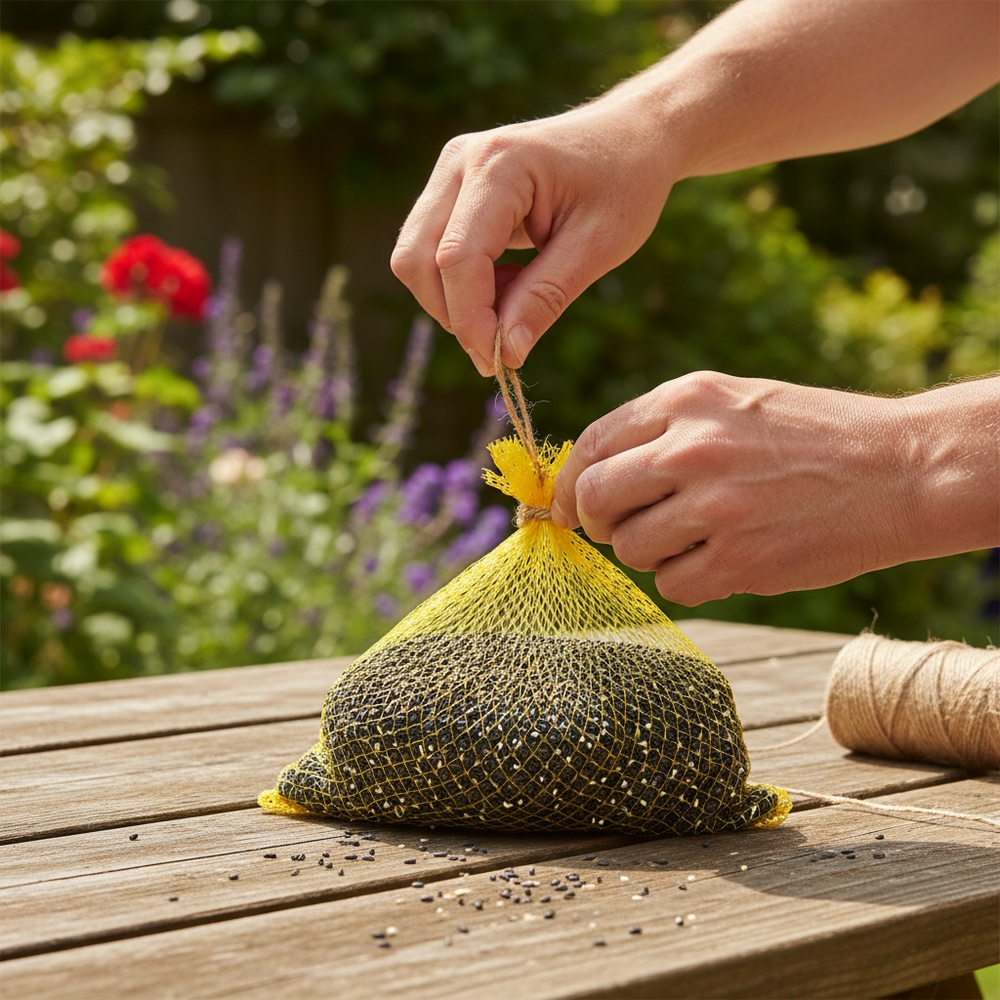
DIY Nyjer Socks: How to Make Your Own Thistle Seed Feeders
Nyjer (thistle) seed is undeniable “black gold” for attracting American Goldfinches, Pine Siskins, and Redpolls. However, feeding Nyjer comes with a specific challenge: the seeds are so microscopic that they will instantly pour out of the ports of a standard bird feeder.
To feed Nyjer, you must use specialized equipment. While heavy-duty polycarbonate tube feeders are the gold standard for durability and weather resistance, they can be expensive, and they only allow a few birds to feed at a time.
This is why Mesh “Sock” Feeders are incredibly popular. A sock feeder is simply a fabric bag with tiny holes. The finches cling directly to the fabric and pull the seeds through the mesh. It is cheap, highly effective, and allows dozens of birds to feed simultaneously.
While you can buy commercial mesh socks on Amazon, you can also easily make your own for pennies using items you probably already have in your house. In this guide, I will show you how to craft a DIY Nyjer sock that will have your yard swarming with yellow finches in no time.
1. Why the “Sock” Method Works
Before you start building, it helps to understand why finches love sock feeders so much.
- The Natural Foraging Experience: Finches do not naturally eat from flat wooden platforms or metal perches. In the wild, they land directly on the prickly heads of thistle plants or coneflowers, clinging upside down or sideways to pluck seeds. A fabric sock perfectly mimics this tactile, clinging experience.
- The “Flock” Capacity: A tube feeder might have 6 ports, meaning only 6 birds can eat. A 12-inch mesh sock has no designated ports. A flock of 20 hungry Pine Siskins can completely cover the sock, feeding from every square inch of the surface.
2. The 5-Minute DIY Nyjer Sock (The Pantry Hack)
This is the fastest, easiest way to create a temporary finch feeder. It is perfect for a sudden winter irruption when you need extra feeding capacity immediately.
The Supplies You Need:
- An old, clean mesh onion bag or garlic bag (the kind with very fine, woven plastic mesh).
- A zip tie or a piece of heavy-duty twine.
- Nyjer seed.
- Note: Do not use a standard cotton tube sock or pantyhose. The weave is too tight, and the birds cannot pull the seed through.
The Build:
- Check the Mesh: Ensure the holes in the onion bag are small enough that the Nyjer seed doesn’t pour out, but large enough that a bird’s beak can penetrate it (usually about 1/16th of an inch).
- Fill the Bag: Pour 1 to 2 cups of fresh Nyjer seed into the bottom of the bag.
- Tie it Off: Gather the excess mesh at the top of the bag. Use the zip tie or twine to tie it off tightly, leaving a loop so you can hang it.
- Hang it Up: Hang the bag from a shepherd’s hook or a low branch.
3. The Reusable DIY Fabric Feeder (The Sewing Method)
If you want a more durable, aesthetic DIY option that you can wash and reuse all season, you can sew your own custom finch socks.
The Supplies You Need:
- A yard of fiberglass window screening or heavy-duty tulle fabric. (Do not use aluminum screening; it will damage the birds’ beaks).
- A sewing machine or needle and heavy-duty outdoor thread.
- A drawstring or thick paracord.
The Build:
- Cut the Fabric: Cut a rectangle of the mesh fabric, approximately 10 inches wide by 15 inches long.
- Sew the Tube: Fold the fabric in half lengthwise. Sew the bottom edge and the long side edge together using a tight stitch, creating a long tube (like a pillowcase). Turn it inside out so the seams are hidden.
- Create the Drawstring Channel: Fold the top, open edge down by 1 inch and sew it all the way around, leaving a small 1-inch gap. Thread your paracord through this channel.
- Fill and Hang: Fill the tube with Nyjer seed, pull the drawstring tight, tie a knot, and hang it from your feeding pole.
4. The Downsides of Sock Feeders
While DIY socks are a fantastic, cheap way to feed finches, they have one major flaw: They are not weather-resistant.
- The Rain Problem: A heavy rainstorm will completely soak the seed inside a mesh sock. Wet Nyjer seed rots and molds incredibly fast.
- The Expert Solution: You must hang your DIY socks underneath a wide, clear plastic Weather Dome. This acts as an umbrella, keeping the sock dry and extending the life of the seed.
- Affiliate Pick: Clear Acrylic Weather Dome / Squirrel Deflector (18-inch)
Conclusion
You don’t need to spend a fortune on high-end hardware to attract a massive flock of Goldfinches. By understanding their natural clinging behavior, you can easily repurpose an old onion bag or sew a piece of window screening into a highly effective DIY Nyjer sock. Fill it with fresh seed, protect it from the rain with a weather dome, and enjoy the yellow flash of your new backyard visitors!