Published
- 5 min read
The Silent Killer: How to Identify and Prevent Salmonella at Your Feeders
The Silent Killer: How to Identify and Prevent Salmonella at Your Feeders
Backyard birding brings nature’s most beautiful and vibrant creatures right to your window. But when you create a highly concentrated food source, you also create the perfect environment for the rapid transmission of disease.
For finches—especially Pine Siskins and American Goldfinches—the most devastating threat is Salmonellosis. This bacterial infection spreads through fecal contamination. When a sick bird visits a crowded feeder, it droppings contaminate the perches, the seed catcher tray, and the ground below. When healthy birds eat seeds that have touched these surfaces, the bacteria spreads through the flock like wildfire.
In a bad year, a localized Salmonella outbreak can wipe out entire neighborhood flocks in a matter of weeks. As a responsible backyard birder, you are the first line of defense. In this guide, I will teach you how to recognize the symptoms of a sick finch, the immediate protocol you must follow to stop the spread, and the preventative measures required to keep your feeding station a safe haven.
1. How to Spot a Sick Finch
Birds naturally hide illness to avoid becoming targets for predators like hawks or neighborhood cats. By the time a finch shows obvious visual symptoms, the disease is already in its advanced stages.
The Warning Signs:
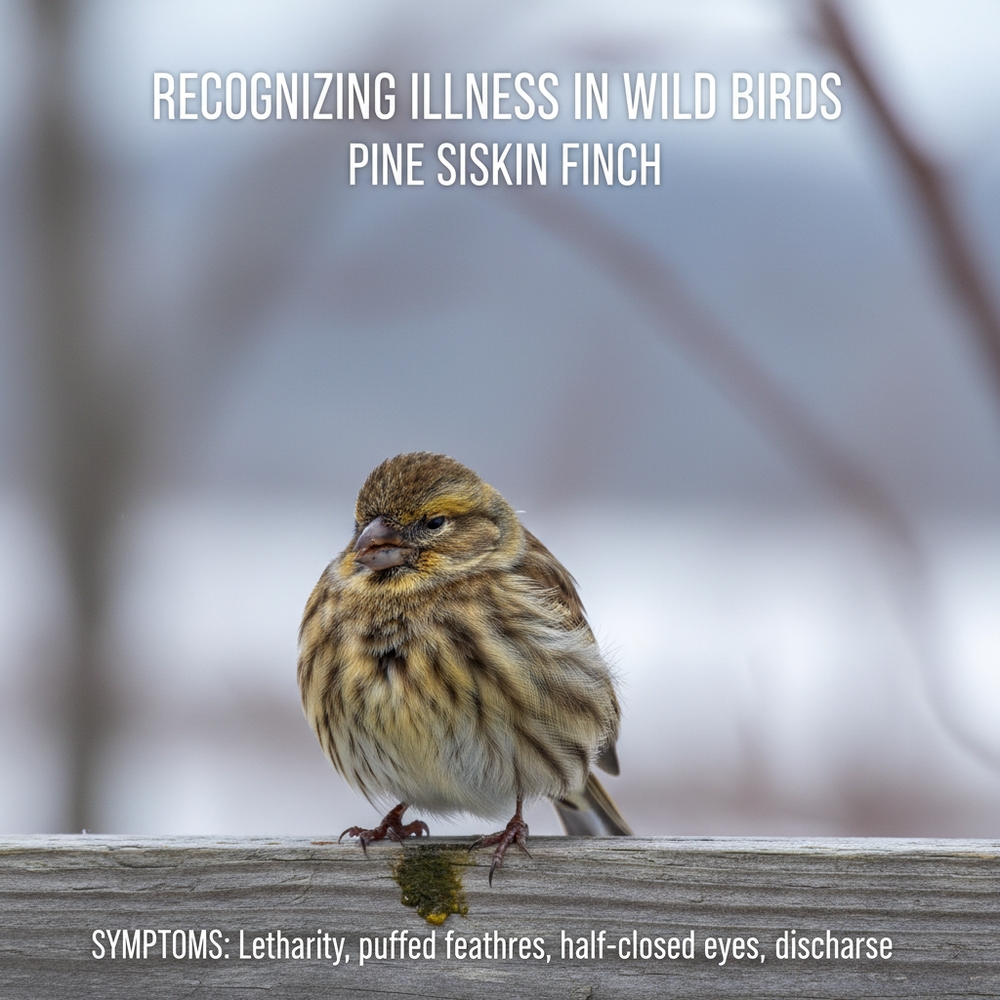
- The “Puffed Up” Look: A sick bird will sit on a perch or on the ground with its feathers completely fluffed out, making it look like a perfectly round tennis ball. They do this to retain body heat as their metabolism crashes.
- Lethargy and Tame Behavior: Healthy finches are nervous and quick. A sick finch will sit motionless on a feeder for long periods. They may appear “tame,” allowing you to walk right up to them without flying away.
- Swollen Eyes or Beak: While more common in House Finches suffering from Mycoplasmal Conjunctivitis (House Finch Eye Disease), crusty, swollen eyes are a definitive sign of severe illness.
2. The Emergency Protocol: What to Do Immediately
If you spot a single bird exhibiting these symptoms, you must assume the entire feeding station is contaminated. Do not wait to see if it gets better.
Step 1: The “Takedown”
Immediately take down every single bird feeder and bird bath in your yard. Dump all remaining seed into the trash (do not compost it, as ground-feeding birds will still find it).
Step 2: The Ground Cleanup
The ground beneath the feeder is highly contaminated with infected droppings. Rake up all the seed hulls, spilled seed, and debris. Dispose of it in a sealed garbage bag. If possible, turn over the top layer of soil or cover the area with fresh mulch.
Step 3: The 14-Day Pause
Do not put the feeders back out. You must enforce a strict two-week “feeding ban” in your yard.
- Why? This forces the flock to disperse. If they cannot congregate at your feeder, the sick birds cannot easily infect the healthy ones. The flock will rely on dispersed, natural food sources in the woods, breaking the chain of transmission.
4. The Deep Sanitization
While your yard is taking its 14-day break, you must sterilize your equipment. A quick spray with a garden hose will not kill Salmonella bacteria.
- Disassemble Everything: Take your tube feeders completely apart.
- The Bleach Bath: Submerge all parts in a solution of 1 part liquid chlorine bleach to 9 parts hot water. Let them soak for a full 15 minutes.
- The Scrub: Use your specialized port brushes to aggressively scrub the feeding ports and perches where the birds stand.
- The Rinse and Dry: Rinse thoroughly under cold water for two minutes. Let the feeder air dry completely in the sun for 48 hours before reassembling.
5. Preventing Future Outbreaks
Once the 14 days have passed and you are ready to re-hang your clean feeders, you must change your habits to prevent a recurrence.
- Ditch the Tray: If you were using a seed catcher tray attached to the bottom of the tube feeder, take it off. Trays are notorious for collecting a mix of seed and droppings. During an outbreak year, it is safer to let the seed fall.
- Avoid Wood: Wooden feeders are porous and nearly impossible to fully sterilize against Salmonella. Stick to non-porous polycarbonate tubes or glass.
- Weekly Cleaning: During peak migration or winter irruption years (when flocks are largest and most stressed), you must perform a preventative bleach soak every single week, regardless of whether you see sick birds or not.
Conclusion
Feeding wild birds is a privilege, but it carries the burden of stewardship. By learning to identify the subtle signs of a puffed-up, lethargic finch, and acting decisively to dismantle and sterilize your feeding station, you can stop a localized outbreak in its tracks. A temporary two-week pause is a small price to pay to ensure the long-term health and survival of the beautiful flocks visiting your yard.