Published
- 5 min read
The Late Nesters: Why Goldfinches Breed in August
The Late Nesters: Why Goldfinches Breed in August
If you observe the birds in your backyard closely, you will notice a frantic rush of activity in April and May. Robins are pulling worms from the mud to feed their hatchlings, Blue Jays are aggressively defending their nests, and Cardinals are actively teaching their fledglings how to fly. Spring is the universal season of rebirth in the avian world.
Except for the American Goldfinch.
While the rest of the neighborhood birds are busy raising their families in the spring, the bright yellow male Goldfinch is simply hanging out at your Nyjer feeder, singing and seemingly ignoring his paternal duties. In fact, Goldfinches are one of the latest-nesting songbirds in North America. They rarely begin to build their nests before late June, and often wait until July or even August to lay their eggs.
As a backyard birder, understanding this unique biological quirk is essential if you want to provide the right habitat and resources for them. In this guide, I will explore the evolutionary genius behind the Goldfinch’s delayed breeding season and explain how you can turn your yard into a late-summer nursery.
1. The Diet Dictates the Timeline
The primary reason Goldfinches wait so long to nest comes down to one word: Seeds.
Almost all other songbirds—even hardcore seed-eaters like Cardinals or Grosbeaks—feed their babies insects. Caterpillars and spiders are packed with the high-density protein that growing chicks need to develop muscles and feathers rapidly. Because the insect population explodes in the spring, that is when these birds choose to breed.
Goldfinches are different. They are strict, obligate granivores. They do not feed their chicks insects. Instead, the parents eat a massive amount of seeds, partially digest them into a milky, highly nutritious slurry, and regurgitate this “seed milk” into the mouths of their babies.
Because they rely entirely on seeds to raise their young, they cannot breed in the spring when native plants are just beginning to bloom. They must wait until the late summer and early autumn when native wildflowers (like thistles, coneflowers, and asters) have finally matured and gone to seed, providing an infinite, wild buffet to sustain their chicks.
2. The Architectural Secret: Thistle Down
The timing of the Goldfinch breeding season isn’t just about food; it’s also about building materials.
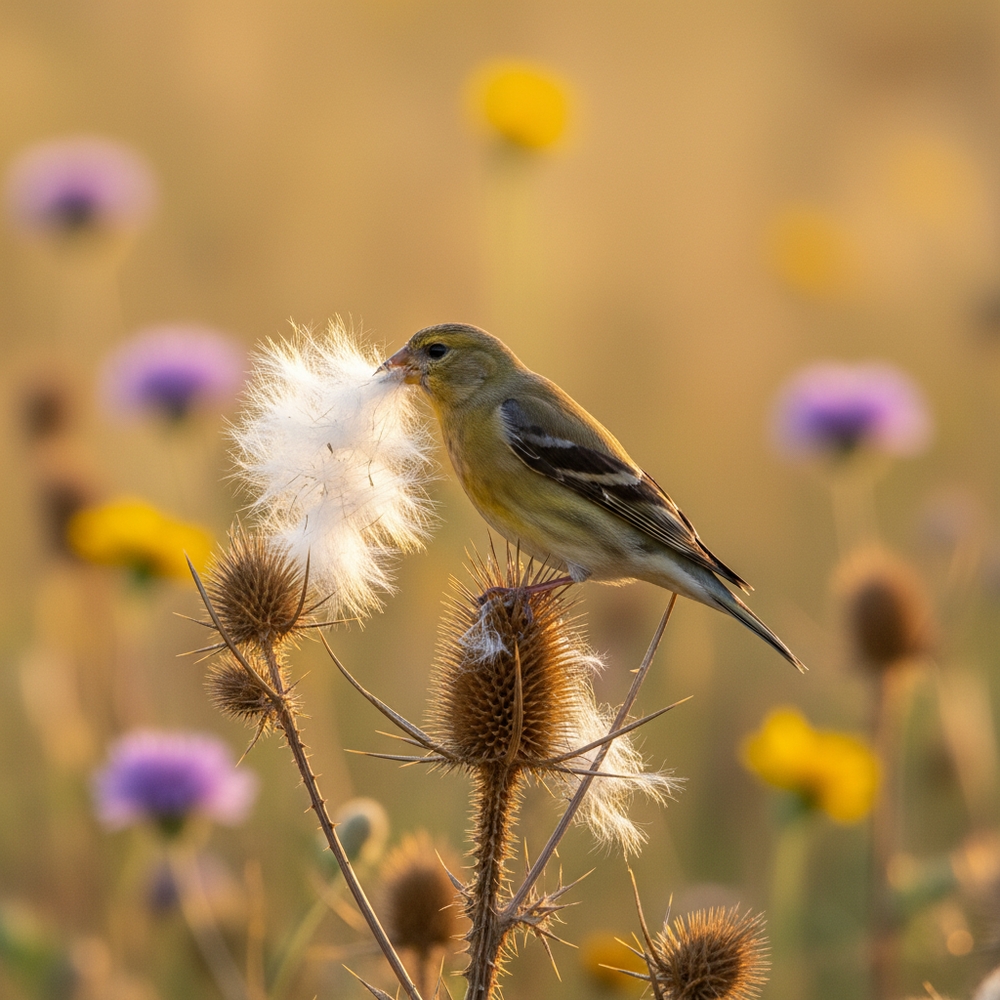
The female Goldfinch is the primary architect of the nest. She builds a tightly woven, incredibly sturdy cup-shaped nest in the fork of a deciduous tree or shrub. However, to ensure the eggs and delicate chicks are insulated against cool late-summer nights, she must line the inside of the nest with the softest material possible.
- The Material of Choice: She relies almost exclusively on the soft, fluffy white “down” attached to the seeds of native thistle plants and milkweed pods.
- The Timing: These plants do not produce their fluffy down until late July and August. The female Goldfinch literally cannot build her signature nest until the landscape provides the necessary materials.
3. How to Support the Late Nesters
Knowing that Goldfinches breed in August allows you to adjust your backyard strategy to support them when they need it most.
1. Stop Deadheading Your Flowers
This is the hardest rule for meticulous gardeners to follow. If you grow native plants like Purple Coneflowers (Echinacea), Black-Eyed Susans, or native thistles, do not cut the dead flowers off in July or August.
- The brown, prickly, “dead” looking flower heads are the exact food source the parents need to create the seed-slurry for their chicks. Let your garden go a little wild in the late summer!
2. Provide Nesting Materials
If you don’t have milkweed or native thistles growing in your yard, you can still provide the crucial soft lining they need for their nests.
- The Hack: Hang a specialized nesting material dispenser near your feeding station in early July. Fill it with natural, untreated cotton fibers. (Never use dryer lint, as it contains toxic soap residues, and never use synthetic yarn or fishing line, which can tangle and kill the birds).
- Affiliate Pick: Songbird Essentials Nesting Material Dispenser
3. Keep the Water Fresh
August is typically the hottest, driest month of the year. While the parents are exhausted from flying back and forth to feed the chicks, a reliable source of clean, shallow water is a lifesaver. Ensure your solar bird bath is scrubbed clean and filled with fresh water daily.
Conclusion
The American Goldfinch is a brilliant exception to the rules of nature. By waiting patiently for the landscape to provide the exact seeds and soft thistle down they require, they ensure the survival of their late-summer broods. By understanding this unique timeline, putting away your pruning shears, and offering supplementary nesting materials from Amazon, you can turn your backyard into a vital sanctuary for the next generation of bright yellow finches.