Published
- 4 min read
Spring Migration: How to Welcome Goldfinches Back to Your Yard
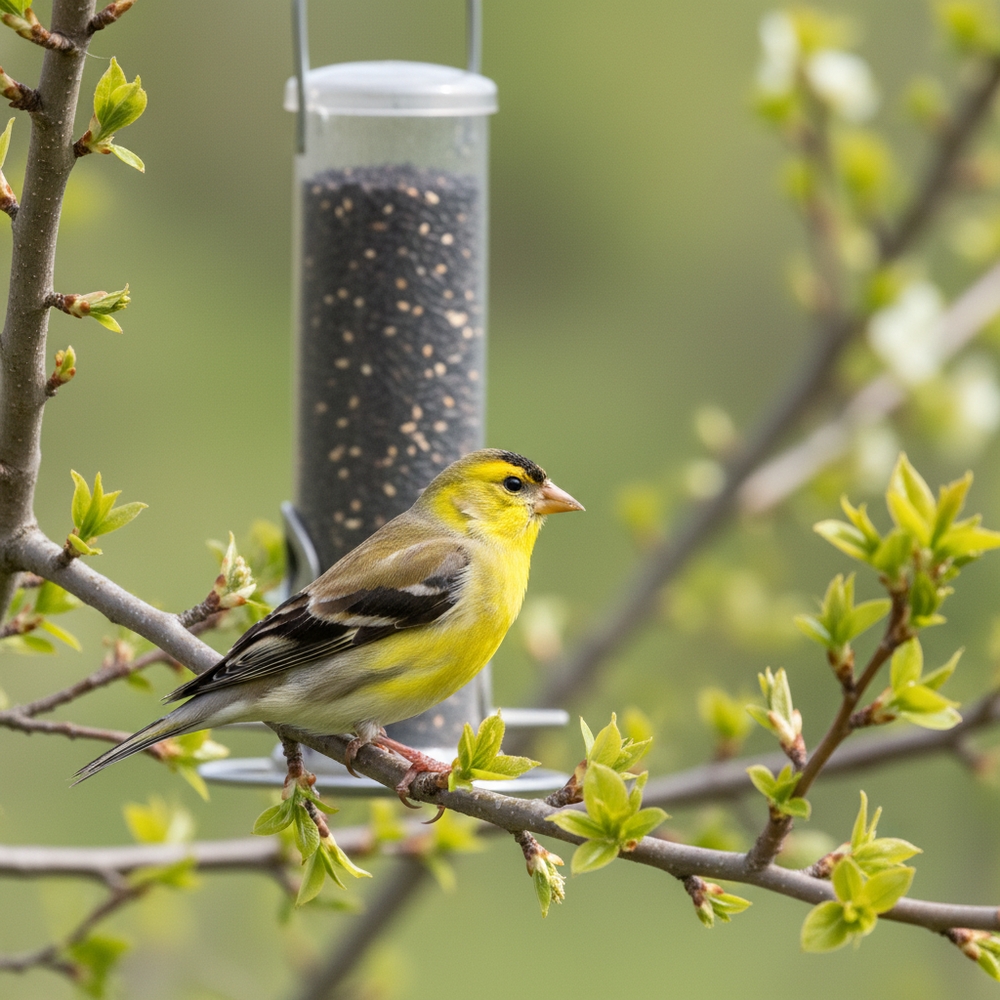
Spring Migration: How to Welcome Goldfinches Back to Your Yard
Every April, a panic sweeps through the beginner birding community. People look out their windows, stare at their newly filled Nyjer tube feeders, and wonder, “Where are all the bright yellow Goldfinches? Did they not survive the winter? Am I doing something wrong?”
The truth is usually far less dramatic. The Goldfinches haven’t abandoned you, and they aren’t ignoring your food. In many cases, they are sitting right on your feeder, eating quietly, and you simply don’t recognize them.
Spring is a season of profound transformation for the American Goldfinch. They undergo a physical and behavioral shift that makes them incredibly difficult to spot. If you want to ensure your backyard is ready to support these beautiful birds as they gear up for the breeding season, you must understand the science of the “Spring Molt.”
In this guide, I will explain why your finches look so strange in April, how to adjust your feeding strategy, and how to guarantee a flock of brilliant yellow males by June.
1. The Disappearing Act: The Spring Molt
Unlike many songbirds that retain their bright plumage year-round (like Cardinals or Blue Jays), the American Goldfinch goes through a complete wardrobe change twice a year.
- Winter Camouflage: To survive the harsh winter and avoid predators against the barren, brown landscape, male Goldfinches shed their bright yellow feathers in late fall. They spend the winter looking like drab, olive-gray females. The only way to identify them is by their distinct black wings with white wing bars.
- The Spring Molt: In late March and April, the males begin to transition back to their breeding colors. This does not happen overnight. For several weeks, they look incredibly ragged and messy. They will have splotches of bright neon yellow mixed with dull, dusty brown feathers. They look like they are suffering from a terrible disease, but they are actually completely healthy and just going through an awkward phase.
Why you don’t see them: Because they are heavily camouflaged and focused on growing new feathers (which requires immense energy), they are less vocal and less active in the early spring.
2. Prepping the Station: Spring Cleaning is Mandatory
While the birds are quietly molting in the trees, your job is to prepare the dining room.
The most common reason finches actually abandon a yard in the spring is poor feeder hygiene. After a long, wet winter, your Nyjer feeders are likely a disaster zone.
- The Danger of Dampness: Freezing and thawing cycles, combined with spring rains, cause the Nyjer seed at the bottom of the tube to rot and clump. If a molting finch (whose immune system is already stressed by growing new feathers) eats moldy seed, it can be fatal.
- The Protocol: You must take down every single tube feeder in April. Empty them completely. Soak them in a 1:9 bleach solution for 15 minutes, scrub every port with a micro-brush, and let them dry in the sun for 48 hours.
- Affiliate Pick: Ergonomic Feeder Cleaning Brush Set
3. The Spring Menu: Fat and Freshness
Once your feeders are sterilized and bone-dry, it’s time to refill them.
Fresh Nyjer is Non-Negotiable
Do not use the half-empty bag of Nyjer seed that has been sitting in your humid garage since October. The essential oils have dried out. You must buy a brand new, fresh bag of jet-black, shiny Nyjer seed to ring in the spring season.
The Sunflower Boost
Growing new feathers requires massive amounts of calories and protein.
- The Strategy: Do not offer just pure Nyjer in the spring. Mix your fresh Nyjer seed 50/50 with Hulled Sunflower Chips (also known as fine sunflower hearts). The sunflower chips provide an immediate, easily digestible fat boost that the molting birds desperately crave.
- Affiliate Pick: Premium Sunflower Hearts/Chips Bird Seed
Conclusion
The arrival of spring doesn’t immediately bring the perfect, calendar-worthy flocks of bright yellow Goldfinches. It brings a quiet, ragged, transitioning flock that is highly vulnerable to disease and desperate for high-fat calories. By understanding the biology of the spring molt, meticulously sanitizing your winter-weary feeders, and offering a rich blend of fresh Nyjer and sunflower chips, you provide the critical support they need. Treat them well in April, and they will reward you with a brilliant, musical summer!