Published
- 4 min read
Attracting Finches with Native Plants: Landscaping for Goldfinches
Attracting Finches with Native Plants: Landscaping for Goldfinches
Buying a premium Nyjer tube feeder is the fastest way to bring American Goldfinches to your yard, but if you want them to stay, nest, and return year after year, you must think beyond the plastic tube.
In the wild, finches are granivores (seed eaters) and strict vegetarians. Even when raising their chicks, they feed them a regurgitated slurry of seeds rather than the insects most other songbirds rely on. To truly transform your backyard into a finch sanctuary, you need to provide their natural, native food sources.
Landscaping for finches requires a slight shift in gardening philosophy. The pristine, deadheaded flower beds of traditional landscaping are useless to a finch. You must embrace a wilder, more organic aesthetic. In this guide, I will share the top native plants that act as natural finch magnets and how to manage your garden for maximum bird activity.
1. The Power of the Sunflower
If you only have space to plant one thing for finches, make it Sunflowers (Helianthus annuus).
- Why Finches Love Them: The massive seed heads of a mature sunflower are a high-calorie feast. A single flower head can sustain several finches for a week. The thick, sturdy stalks also provide an excellent natural perch.
- The Strategy: Plant a “sunflower forest” along a fence line. Choose branching varieties that produce multiple smaller heads rather than single-stem giants, as they provide more perching opportunities and a longer blooming season.
- The Golden Rule: Do not harvest the heads or cut the stalks down in the fall. Let them dry and droop naturally. The finches will pick the dried heads clean throughout the autumn.
2. Coneflowers (Echinacea)
Purple Coneflowers are beautiful, drought-tolerant, and incredibly attractive to Goldfinches.
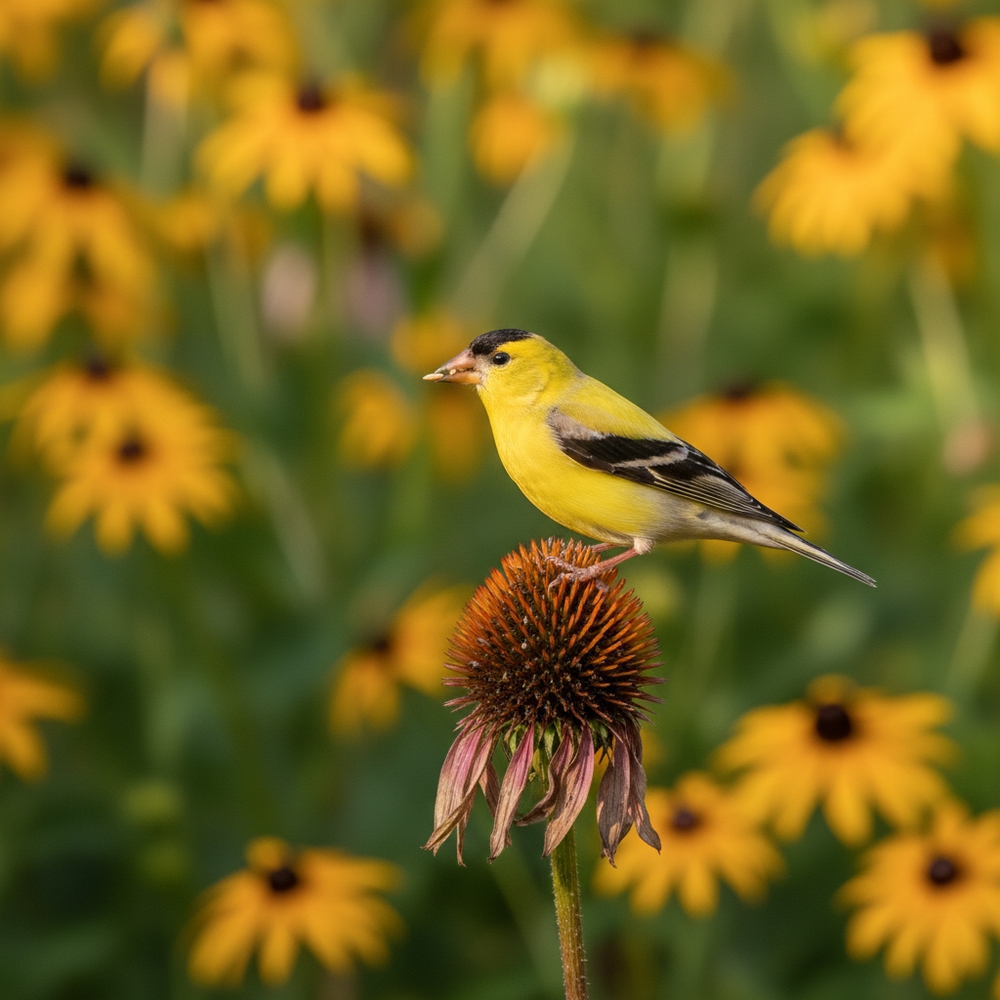
- Why Finches Love Them: As the flower matures, the prickly, cone-shaped center swells with hundreds of tiny, nutritious seeds. Finches have the perfect pointed beaks to pluck these seeds out from between the stiff bristles.
- The “Messy” Aesthetic: To a gardener, a brown, petal-less coneflower looks “dead.” To a finch, it looks like a dinner plate. Do not deadhead your coneflowers in late summer. Allow the seed heads to dry out completely on the stem.
3. Native Thistles and Teasels
American Goldfinches are so heavily associated with thistle that they used to be colloquially called “Thistle Birds.”
- Why Finches Love Them: The seeds are rich in oil, and the soft “down” or “fluff” attached to thistle seeds is the exact material female Goldfinches use to line their nests. In fact, Goldfinches nest much later in the summer than other birds (late June or July) specifically because they wait for native thistles to go to seed to build their homes.
- The Warning: Many commercial thistles are invasive weeds. Ensure you are planting native species (like Flodman’s Thistle or Tall Thistle) and avoid noxious weeds like Canada Thistle.
4. Black-Eyed Susans (Rudbeckia) and Asters
These bright, cheerful perennials bloom late in the summer, providing a vital food source just as the adult finches are weaning their fledglings.
- Why Finches Love Them: Like coneflowers, the prominent central disks are packed with tiny seeds. They grow in dense clumps, allowing a small flock to forage together safely.
- The Winter Pantry: Asters hold onto their tiny seeds deep into the winter. Leave the stems standing tall through the snow; they provide crucial natural foraging when food is scarce.
Conclusion
A successful backyard birding habitat relies on layering. By supplementing your hanging Nyjer feeders with a wild, organic border of native Sunflowers, Coneflowers, and Asters, you provide a dynamic, multi-season food source. Put the pruning shears away this autumn, let your garden go to seed, and enjoy the bright yellow flashes of Goldfinches foraging exactly as nature intended.