Published
- 5 min read
Mesh vs. Tube Feeders: Which is Best for Attracting Finches?
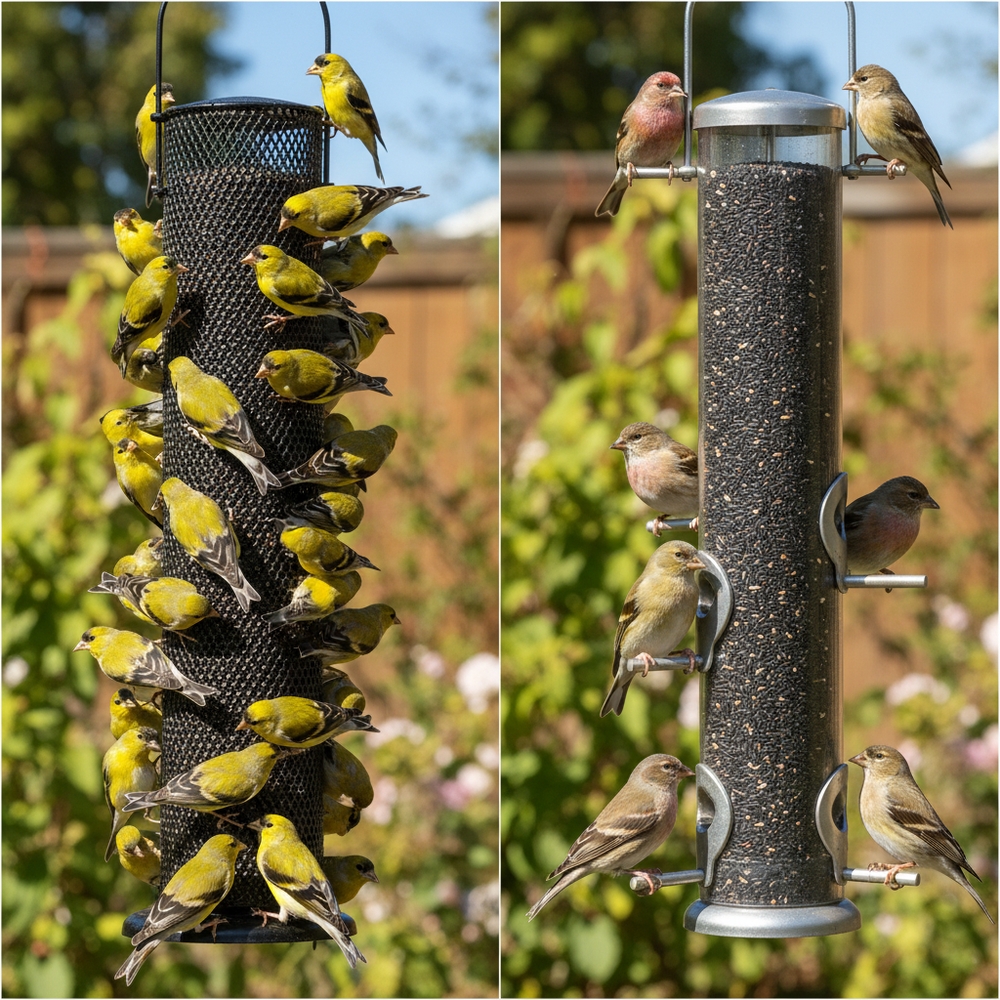
Mesh vs. Tube Feeders: Which is Best for Attracting Finches?
When you walk down the birding aisle of any hardware store, you are immediately confronted with a choice: do you buy the sleek, clear plastic tube feeder with tiny perches, or do you buy the flexible metal or fabric mesh “sock”?
Both designs are specifically marketed for holding tiny Nyjer (thistle) seeds, and both promise to attract massive flocks of American Goldfinches. However, the way birds interact with these two designs is completely different. Furthermore, each design has its own unique set of maintenance challenges and weather vulnerabilities.
As a backyard birding expert, I am frequently asked which design is “better.” The truth is, the best choice depends entirely on the size of your flock and the climate you live in. In this comprehensive guide, I will break down the mechanics, pros, and cons of Mesh vs. Tube feeders so you can make the smartest investment for your backyard.
1. The Tube Feeder: The High-End Standard
A classic Nyjer tube feeder is a rigid cylinder (usually made of clear polycarbonate plastic or glass) featuring small, slit-like feeding ports situated just above horizontal perches.
The Pros:
- Weather Protection: This is the primary reason to buy a tube feeder. The rigid plastic walls completely protect the seed from rain, snow, and morning dew. If you live in a wet climate (like the Pacific Northwest or the Northeast), a tube feeder is almost mandatory to prevent your expensive Nyjer seed from molding.
- Seed Visibility: You can easily see exactly how much seed is left from across the yard.
- Durability: High-quality polycarbonate tubes from brands like Droll Yankees are virtually indestructible and can last a decade.
The Cons:
- Limited Capacity: A tube feeder can only feed as many birds as there are ports. A 6-port feeder feeds 6 birds. If you have a flock of 30, the rest will sit in the trees waiting their turn.
- Cleaning Difficulty: Scrubbing out the bottom of a 24-inch narrow tube requires specialized, long-handled brushes.
Affiliate Pick:
If you want the best tube feeder on the market, look no further than the Droll Yankees Finch Flocker.
2. The Mesh Feeder: The High-Capacity Buffet
A mesh feeder can be a literal fabric “sock” or a rigid metal cylinder made of tightly woven steel mesh. There are no designated feeding ports; the entire surface of the feeder is accessible.
The Pros:
- Maximum Capacity: Finches are highly acrobatic. They do not need perches. On a mesh feeder, they simply grab the mesh with their claws and cling to the side. A standard metal mesh feeder can easily hold 15 to 20 finches simultaneously, covering every square inch of the surface.
- Airflow: Because the seed is exposed to the air on all sides, it stays incredibly dry and fresh as long as it doesn’t rain.
- Pest Deterrence: Large, heavy bully birds (like House Sparrows or Starlings) have a very hard time clinging to a vertical mesh surface without perches.
The Cons:
- The Rain Ruin: This is the critical flaw. A mesh feeder provides zero protection from the elements. A single heavy rainstorm will soak the entire column of seed. If the birds don’t eat it within a day, it will rot, clump together, and sprout toxic mold.
- Seed Spillage: Because the birds pull seeds through the mesh, they often drop a significant amount of hulls and uneaten seeds onto the ground below.
Affiliate Pick:
If you want the capacity of mesh but the durability of metal, try a Metal Mesh Finch Feeder.
3. The Expert Verdict: Which Should You Buy?
The decision comes down to your local weather and the size of your flock.
- Choose a Tube Feeder if: You live in an area with frequent rain or snow, or if you prefer a low-maintenance setup where you can fill the feeder and leave it for a week without worrying about spoilage.
- Choose a Mesh Feeder if: You live in a dry climate (or are feeding during a dry summer), and you want to attract and accommodate massive, overwhelming flocks of finches that would normally fight over a limited number of ports.
The Hybrid Strategy
For serious backyard birders, the ultimate setup is to use both. During the wet spring and winter months, I rely entirely on my polycarbonate tube feeders. However, when the massive migratory flocks arrive in late summer and the weather is dry, I hang three or four cheap fabric mesh socks to handle the overflow traffic.
Conclusion
Understanding the difference between mesh and tube feeders is key to managing your backyard flock effectively. By matching your feeder style to your climate and capacity needs, you guarantee that your expensive Nyjer seed stays fresh and your Goldfinches stay happy. Evaluate your yard, choose your gear, and get ready for a vibrant, yellow-filled season!