Published
- 5 min read
The Winter Irruption: How to Spot the Rare Pine Siskin
The Winter Irruption: How to Spot the Rare Pine Siskin
For most backyard birders, the arrival of winter means a predictable, steady flock of resident Cardinals, Chickadees, and winter-plumage Goldfinches. However, every few years, the standard winter routine is shattered by a sudden, chaotic invasion of frantic, heavily streaked little birds that swarm the Nyjer feeders in massive numbers.
You haven’t been invaded by strange sparrows; you are experiencing an Irruption of Pine Siskins.
Pine Siskins are nomadic winter finches. They breed in the dense, high-altitude coniferous forests of Canada and the northern United States. Most years, they stay up north. But during an “Irruption Year” (which happens when the cone seed crops in the boreal forests fail), millions of these birds are forced to fly south in a desperate search for food.
When a flock of hungry Siskins finds your backyard, it is a thrilling event. But because they look remarkably similar to female House Finches or common sparrows, many beginners miss them entirely. In this guide, I will show you how to identify the elusive Pine Siskin and what to offer at your feeding station to keep them coming back all winter long.
1. Identification: The “Yellow Flash” in the Streaks
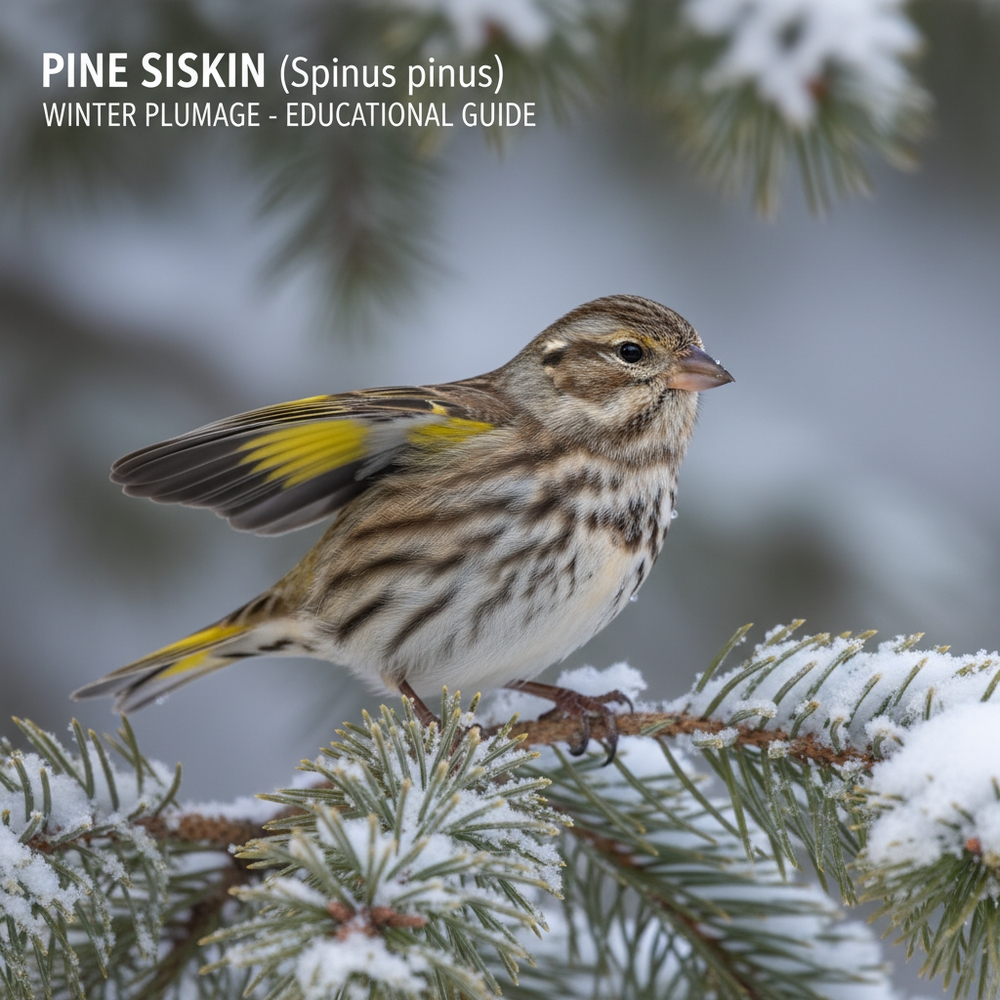
At first glance, a Pine Siskin looks like a very small, very angry, brown and heavily streaked sparrow. They are roughly the exact same size and shape as an American Goldfinch.
To correctly identify them, you must look for the “Tells”:
The Bill (The Sharper Profile)
While a House Finch has a thick, slightly curved, conical beak for crushing seeds, the Pine Siskin has a remarkably slender, sharply pointed beak (very similar to a Goldfinch). This beak is designed for extracting tiny seeds from pinecones.
The Yellow Flashes (The Dead Giveaway)
If you see a streaky brown bird, look closely at the wings and the base of the tail.
- The Markings: Pine Siskins have subtle, but distinct, flashes of yellow edging on their flight feathers and tail.
- When to look: The yellow is often hidden when the bird is perched and resting. The best time to see it is when they flutter their wings to maintain balance on a feeder or when they take off in flight. If you see a flash of yellow on a brown, streaky bird, you have found a Siskin!
The Behavior: Frantic and Feisty
Siskins are not polite diners. They travel in tight, nervous flocks. When they descend on a feeder, they bicker constantly, spreading their wings (flashing that yellow) and lunging at other birds to defend their spot on the perch.
2. The Siskin Menu: Fueling the Nomads
Pine Siskins are driven south by starvation. When they arrive, they are desperate for high-fat calories.
1. Nyjer Seed (Their Absolute Favorite)
Because their beaks are nearly identical to Goldfinches, Siskins are perfectly adapted to eating tiny Nyjer (thistle) seeds.
- The Setup: During an irruption year, Siskins arrive in flocks of 20 to 50 birds. A single tube feeder will be overwhelmed instantly. If you suspect an irruption is happening in your area, hang multiple Mesh Nyjer Socks. Siskins are highly acrobatic and will cover the entire surface of the sock, allowing dozens to feed at once.
2. Hulled Sunflower Chips
While they love Nyjer, they also need the heavy fat of black oil sunflower seeds. However, their tiny beaks struggle to crack the thick black shells.
- The Fix: Offer “Sunflower Chips” (pre-shelled sunflower hearts). This provides the massive calorie hit of sunflower seed without the energy expenditure of cracking the hull.
- Affiliate Pick: Premium Sunflower Hearts/Chips Bird Seed
3. The Danger of the Flock: Disease Prevention
The sudden arrival of 50 frantic birds to a single feeding station creates a massive biological hazard. Pine Siskins are highly susceptible to Salmonellosis, a bacterial disease that spreads rapidly in dense flocks.
- The Signs: If you see a Siskin sitting alone on the ground, puffed up, lethargic, and allowing you to approach it, it is likely sick.
- The Expert Protocol: If you see a single sick bird, you must take down all your feeders immediately. Empty them, soak them in a 1:9 bleach solution, and do not put them back out for at least two weeks. This forces the flock to disperse and prevents your yard from becoming the epicenter of a deadly outbreak.
Conclusion
Experiencing a Pine Siskin irruption is one of the great joys of winter birding. It is a stark reminder of the wild, nomadic nature of these tiny survivors. By learning to spot the subtle flashes of yellow in their wings, stocking up on high-quality Nyjer and sunflower chips, and maintaining rigorous feeder hygiene, you can provide a life-saving oasis for these rare winter guests. Keep your binoculars by the window; the nomads are coming!