Published
- 5 min read
The Silent Feeder: Why Finches Are Ignoring Your Nyjer Seed
The Silent Feeder: Why Finches Are Ignoring Your Nyjer Seed
It’s one of the most common complaints in backyard birding: “I bought a brand new tube feeder, filled it with expensive Nyjer seed, and hung it in a perfect spot. For the first two weeks, it was swarming with Goldfinches. Now, it has been sitting full for a month, and I haven’t seen a single bird. What happened? Did they migrate?”
If it’s the middle of summer and your finches have suddenly abandoned a full feeder, they haven’t migrated. They are likely sitting in a tree directly above your yard, looking at your feeder in disgust.
Finches are incredibly picky eaters, and they have an acute sense for nutritional value. If your feeder has gone silent, the answer is almost always the same: Your Nyjer seed has gone bad.
In this expert guide, I will explain the science behind why Nyjer seed spoils so quickly, how to diagnose stale seed, and the professional storage methods you must use to keep your flock coming back.
1. The Science of the Spoilage: The Oil Factor
To understand why finches reject old seed, you have to understand why they eat it in the first place.
Nyjer (often mislabeled as thistle) is not actually a seed; it is a tiny, oil-rich nut from an African yellow daisy. Finches do not eat the black hull; they use their pointed beaks to crack the hull open and eat the microscopic, highly nutritious “meat” inside. This meat is packed with lipids (fats) and oils, which provide a massive calorie boost.
The Problem: Natural oils are highly volatile. Once a bag of Nyjer seed is opened and exposed to oxygen, heat, and sunlight, those essential oils begin to evaporate and oxidize.
- Within a few weeks of exposure, the seed dries out completely.
- To a finch, a dried-out Nyjer seed is just an empty, tasteless black hull with zero nutritional value. They will crack one open, find nothing inside, and abandon the feeder immediately to find a better food source.
2. The Diagnosis: How to Tell if Your Seed is Bad
Before you blame the feeder location or the weather, you must inspect the seed. Do not just look at it through the plastic tube; pour some into your hand.
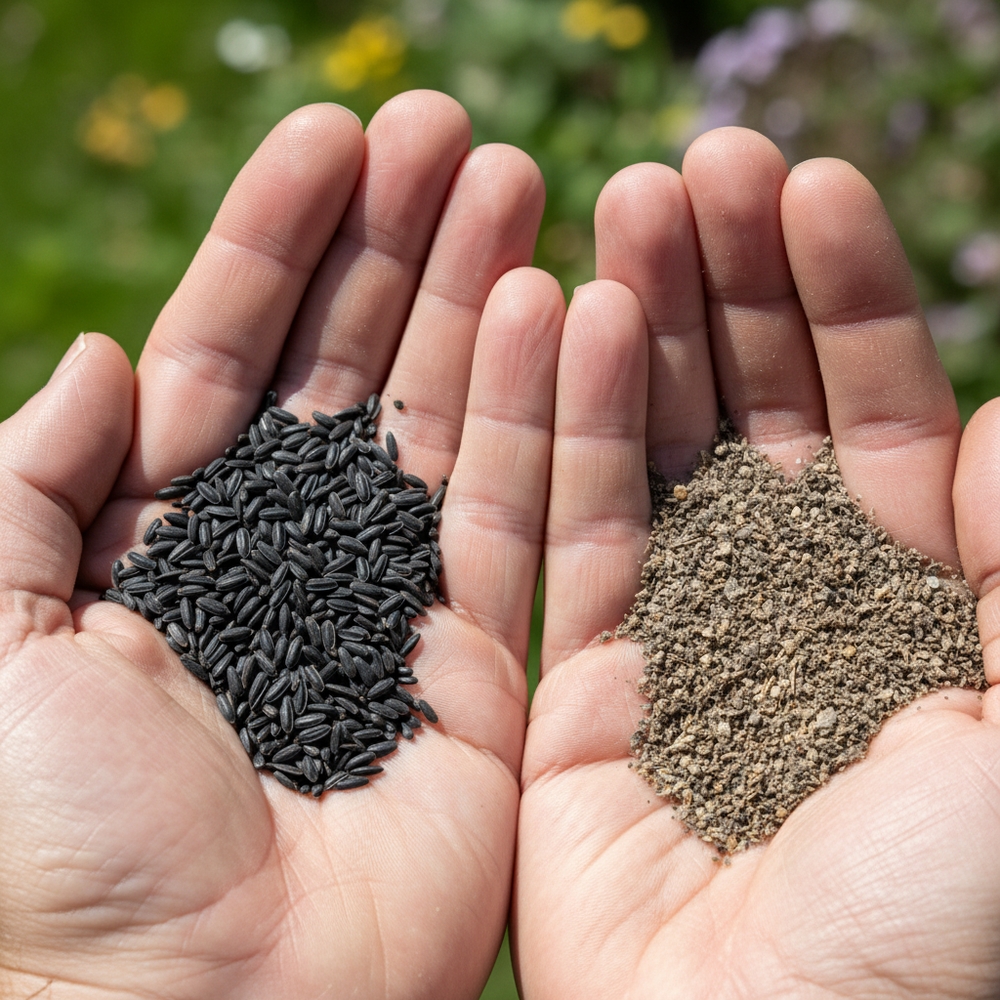
Test 1: The Visual Inspection
- Fresh Nyjer: Should be jet-black, plump, and have a distinct, slightly greasy shine.
- Stale Nyjer: Looks dull, flat, grayish-brown, and dusty.
Test 2: The “Pinch” Test
Take a pinch of seeds between your thumbnail and index fingernail and squeeze hard.
- Fresh Nyjer: You should feel a slight “pop,” and if you squeeze hard enough, you might see a microscopic smudge of oil on your nail.
- Stale Nyjer: The seed will simply crumble into dry dust.
Test 3: The Smell Test
Bury your nose in the bag.
- Fresh Nyjer: Smells slightly sweet and nutty.
- Stale Nyjer: Smells like dusty cardboard, or worse, has a sharp, rancid odor if the oils have oxidized completely.
3. The “Big Bag” Trap: Buying Strategies
The most common reason people end up with stale seed is because they try to save money by buying in bulk.
When you walk into a big-box hardware store and buy a massive 20-pound bag of Nyjer seed that has been sitting on a hot warehouse shelf for a year, the seed is likely dead before you even open it.
- The Golden Rule: Never buy more Nyjer seed than your flock can consume in one month.
- The Rotation: Buy smaller, 5-pound or 10-pound bags from reputable sellers with high turnover rates, ensuring you are getting a fresh crop.
- Affiliate Pick: Wagners Nyjer Seed (10lb Bag). Wagners is a highly reputable brand with excellent freshness standards.
4. Professional Storage and Feeder Management
If you have fresh seed, you must protect it.
- Airtight Storage: The moment you open a bag, transfer the remaining seed into a heavy-duty, airtight plastic container (like a pet food vault) and store it in a cool, dark basement. Never leave an open bag in a hot, humid shed.
- Micro-Filling: If your flock is small, do not fill a massive 36-inch tube feeder to the top. The seed at the bottom will sit there for weeks, drying out in the sun or molding after a rainstorm. Only fill the tube halfway, and refill it frequently.
- The Purge: If your feeder has been ignored for a week, dump it out. Do not pour fresh seed on top of old seed. Wash the tube, let it dry completely, and refill it with a fresh batch.
Conclusion
Feeding finches requires a commitment to quality over quantity. If your yard has gone quiet, the solution is simple: purge the old seed, scrub your feeders, and offer a fresh, oily batch of premium Nyjer. Once the “scout” finches realize the buffet is serving fresh food again, your backyard will be filled with brilliant yellow flashes and cheerful songs in no time.